Eskişehir GoTürkiye
Eskişehir stands out with its cultural richness and an urban identity where different cultural communities and groups live together in harmony.

Eskişehir stands out with its cultural richness and an urban identity where different cultural communities and groups live together in harmony.
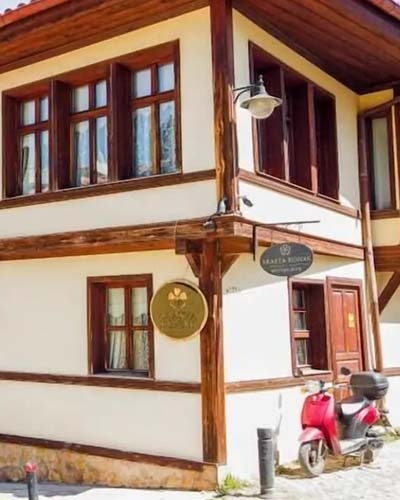
The earliest building in Odunpazarı, which contains the Turkish-Islamic culture and civil architecture examples in the city's past, is the Alaeddin Mosque, dating to the second half of the 13th century.
They are very agile and fast dogs with treamlined bodies, deep rib cages, long legs, and muscular bodies. Dogs with white fur bred in Sivrihisar weigh between 40-60 kg and females 35-45 kg.
Known as Anatolia's wheat warehouse since ancient times, Eskişehir is famous for its dishes made with flour. The use of poppy is also very common. Poppy-walnut bread and poppy seed twist are famous.
Eskişehir has an enviable richness in terms of flora. Nearly 2000 plant species display natural distribution within the provincial borders. More than 220 of these species are endemic.
Nasreddin Hodja, one of the philosophers of Turkish-Islamic Culture, a great luminary and humorous master, was born in 1208 in Hortu Village of Sivrihisar District of Eskişehir, now called Nasreddin Hodja Neighborhood.
Eskişehir is 152 kms from Bursa, 233 kms from Ankara, 323 kms from İstanbul, 342 kms from Konya, 415 kms from İzmir and 421 kms from Antalya by road.
Take a walk along Hamamyolu Street; This street, which is a beautiful walking area that is closed to traffic, has many shopping venues as well as thermal water resources.
If you come to Eskişehir early in the day, drink a cup of Turkish coffee by the Porsuk River and start the day.