Experiences

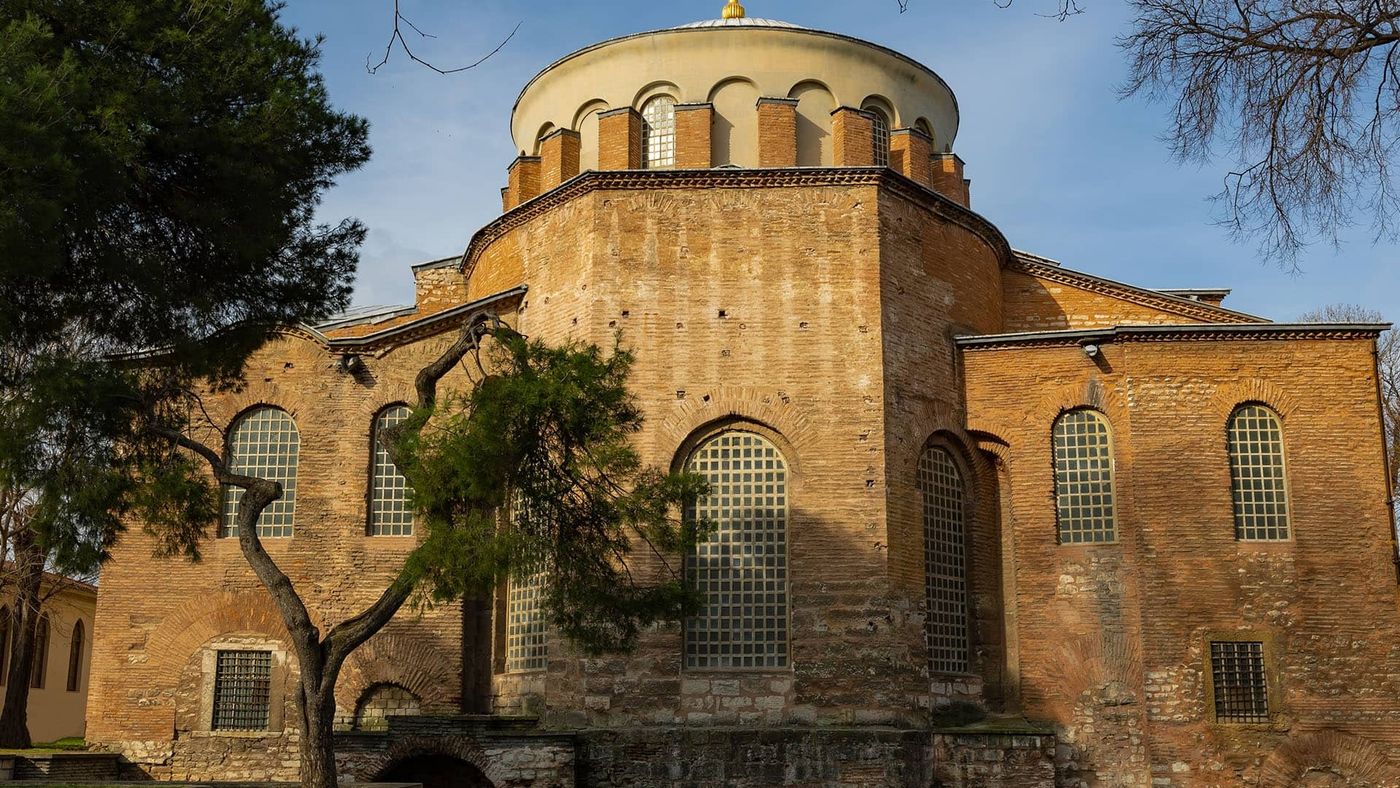
When looking at the rich heritage of two of the oldest places of worship in İstanbul, we may not realise how closely connected they were. Although it is now within the walls of the Topkapı Palace, the Aya Irini, at one point in history, was connected to the Ayasofya Mosque by porticos. Both were known as the Megale Ekklesia.
The Aya Irini is located in the Topkapı Palace and is one of the most beautiful buildings in the city. The place was originally a church, but instead of being converted back into a mosque after the reconquest, it was abandoned.
Inside are three fascinating elements that have not been preserved in any other Eastern Roman church in the city. The Synthronon; the five rows of built-in seats surrounding the apse, were used by the clergy during services. Above it rises a simple black mosaic cross on a gold background, which dates from the time of iconoclasm when figurative representations were forbidden. At the back of the church is a cloister-like courtyard where the deceased Eastern Roman emperors once lay in their porphyry sarcophagi. Most of them have been taken to the Archaeological Museums.
Now the Aya Irini has been converted into a museum and houses some exquisite works of art by ancient painters and artists. If you are in town, do not miss visiting this structure. It is often considered the inspiration and model of the earlier developments of the Ayasofya Mosque.
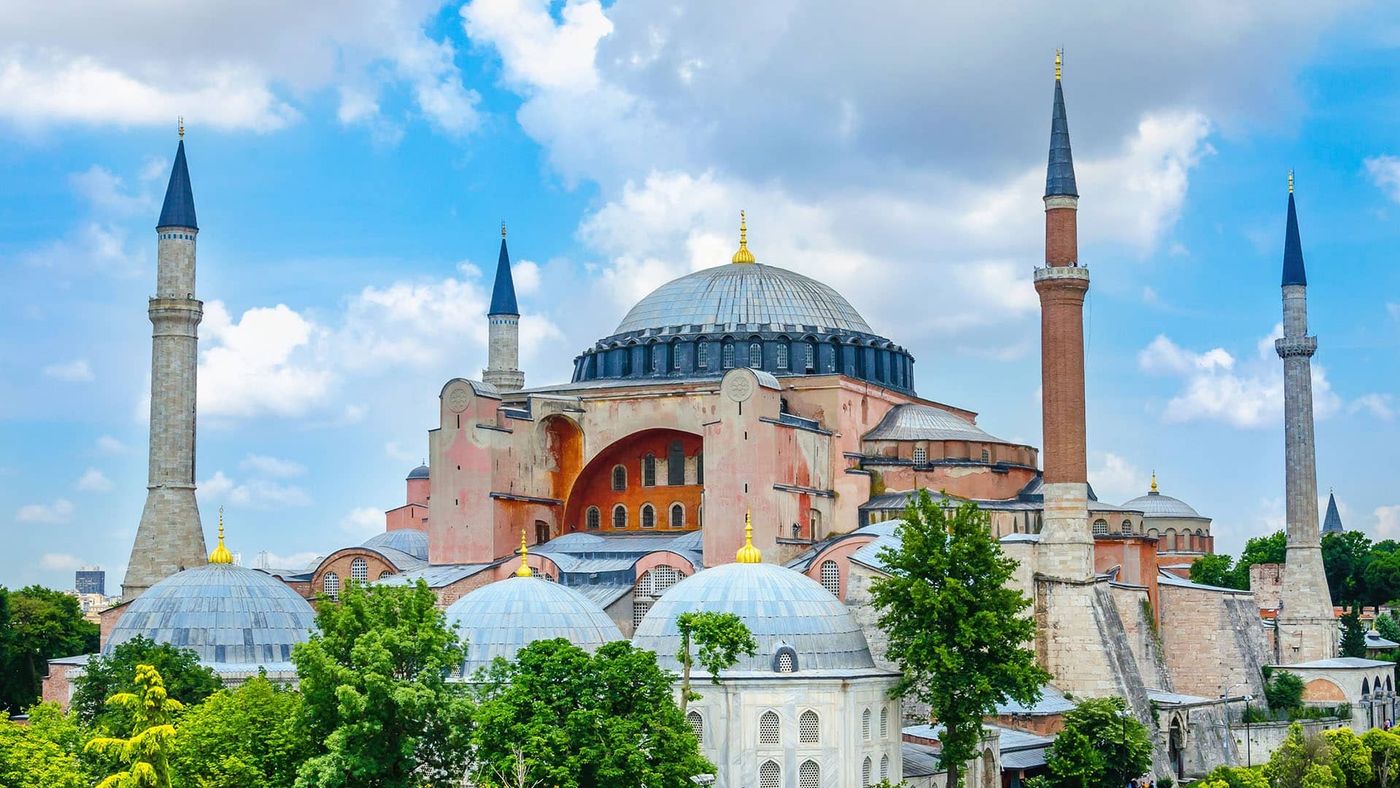
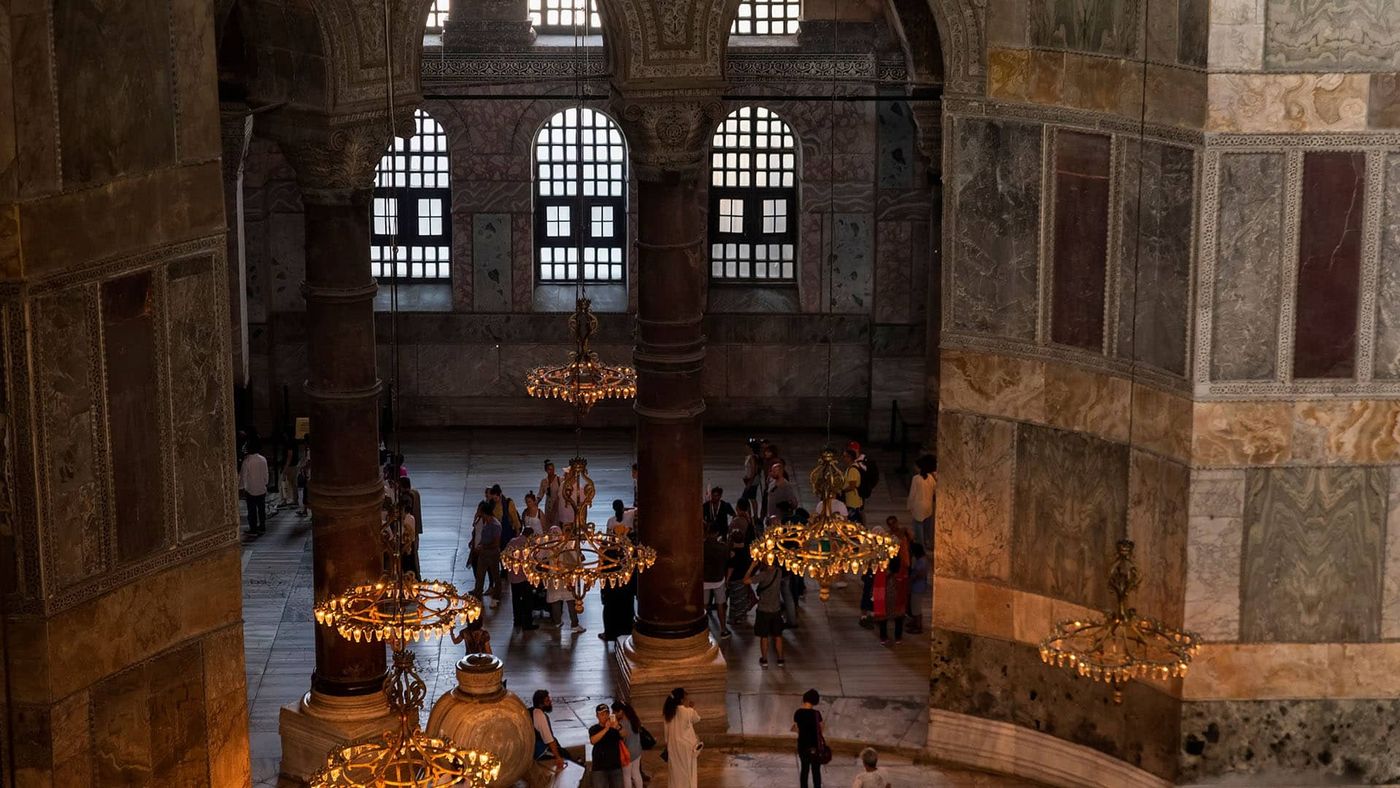
Ayasofya Mosque (Hagia Sophia), known as ‘Sacred Wisdom’ from the 5th Century, is considered the building that changed the history of architecture. The building was designed by geometers Isidorus of Miletus and Anthemius of Tralles. The marble used for the floor and ceiling were made in Anatolia, today’s eastern Türkiye and Syria, while other bricks; for the walls and parts of the floor came from North Africa. The interior of the Hagia Sophia is lined with huge slabs of marble, for the impression and imitation of moving water. Finally, the 104 columns of the Hagia Sophia were imported from the Temple of Artemis in Ephesus and Egypt.
The building is a testament to ingenuity, measuring about 269 feet in length and 240 feet in width, and at its highest point, the domed roof rises about 180 feet into the air. When the first dome partially collapsed in 557, Isidore the Younger; the nephew of Isidorus, one of the original architects, designed a replacement with structural ribs and a more pronounced arch.
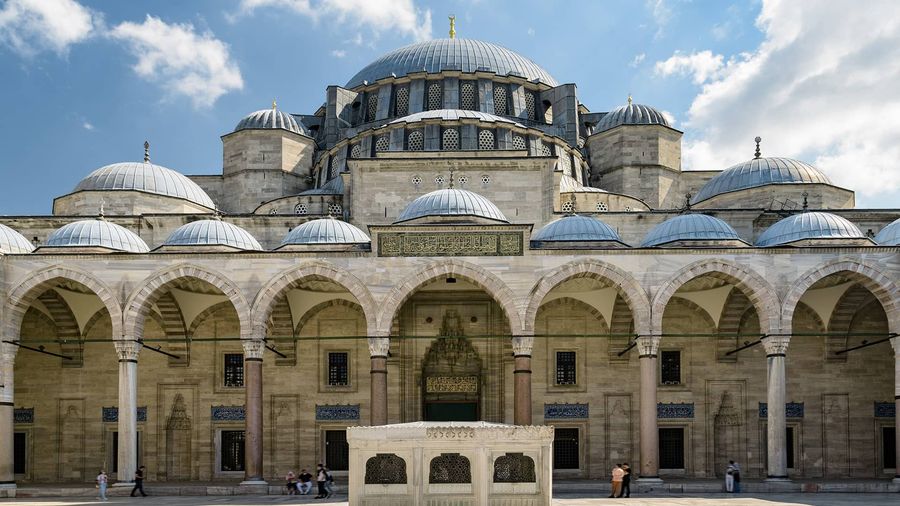
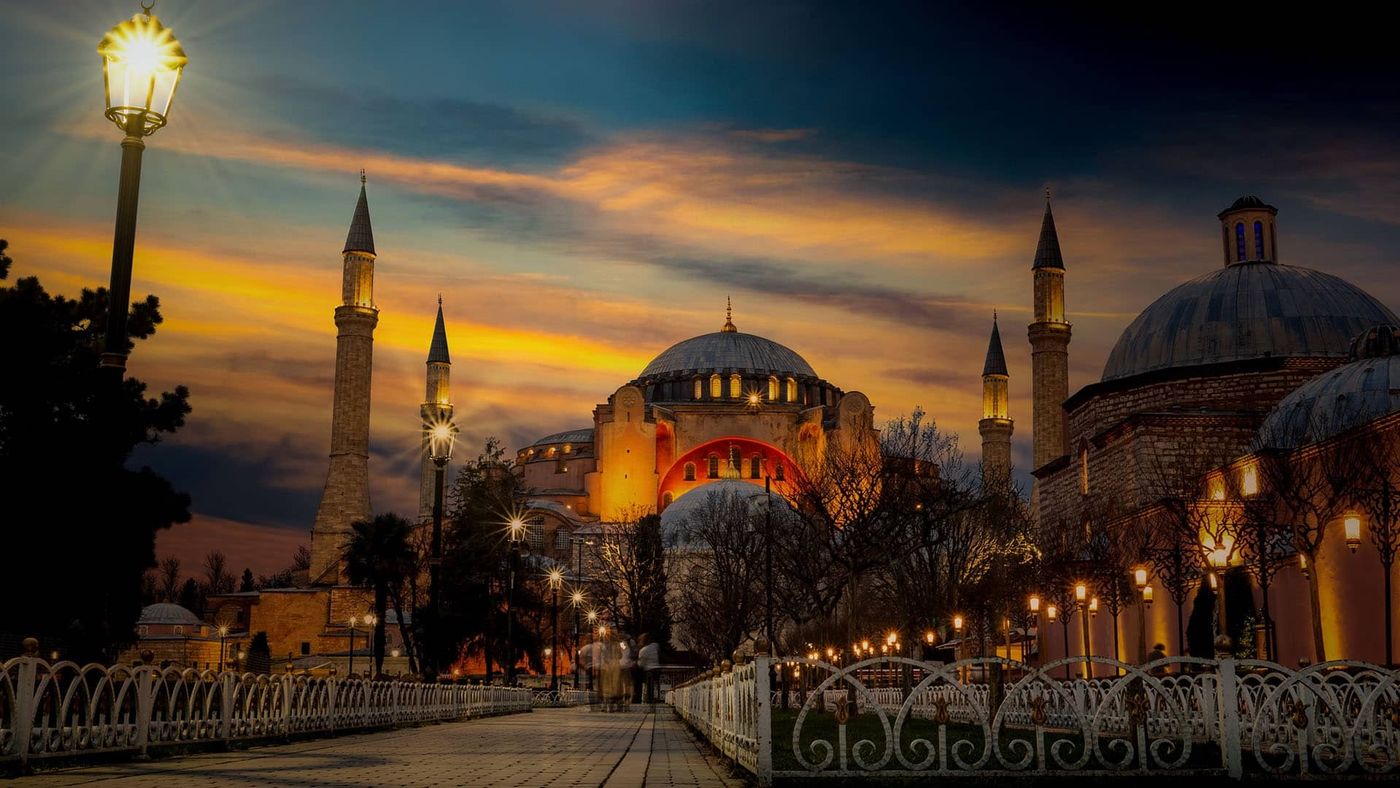
Dominating İstanbul’s skyline, the Ayasofya Mosque is marvelled by visitors at the wonders inside, but the exterior of the mosque is also worth exploring; the four minarets, the Sibyan School; a primary school, the Fountain, the Clock Hall, and the Treasury Building are iconic elements of the structure’s bold design. The mausoleums of the Ottoman sultans, located outside the building, are equally fascinating to visit.
Designed as a domed basilica, Ayasofya has a large nave, two side aisles (north and south), and two narthex in the west. However, it is not so much the basic architectural form as the sheer size and ingenious engineering feats that make this church so unique and exemplary. The architectural crowning glory in the truest sense of the word is the extraordinary dome that crowns the central building.
With a diameter of 33 m and an apex at a height of 56 m, the dome is of monumental proportions. Nevertheless, it does not appear oppressive but seems to float, ‘As if hanging from the sky on the fabulous golden chain’. - Prokopios. The openwork interior walls and the slender marble columns play only a subordinate role in terms of strength and stability. When the viewer’s gaze wanders upwards in search of details, it is soon lost in the sea of lights, in which all references to scale fade.
There are forty windows under the dome through which the sunlight enters. The sunlight streaming from the windows around the high dome, flooding the interior and causing the golden mosaics to shine, seemed to dissolve the solidity of the walls and created an atmosphere of indescribable mystery.
The mosaic in the apse depicts the Mother of God with the Christ Child as a symbol of the Incarnation. From the side window sills, the light eclipses and accents this masterpiece.
The feeling of dematerialisation was created by the increase in light with increasing height. This effect, which begins in the dark vestries, moves upwards via the bright galleries and the light-flooded rows of windows in the tympana and culminates in the dome itself. The precious gold mosaics in the side wings are highlighted from the surrounding darkness courtesy of a renovation with directional illumination.
The marble jars on either side of the Emperor's Gate each hold 1200 litres and are a legacy of Sultan Murad III. They are used by devout Muslims for the ritual ablution known as Abdest. From the upper galleries, spotlights now accentuate the magnificence of the three-dimensionality of these containers.
Architects Anthemius of Tralles and Isidorus of Miletus recognised that natural light should be considered an essential building material. This simple realisation led to the Hagia Sophia becoming one of the greatest masterpieces in architectural history. The light contributes in a discreet but majestic way to further emphasise the unique intensity and beauty.